
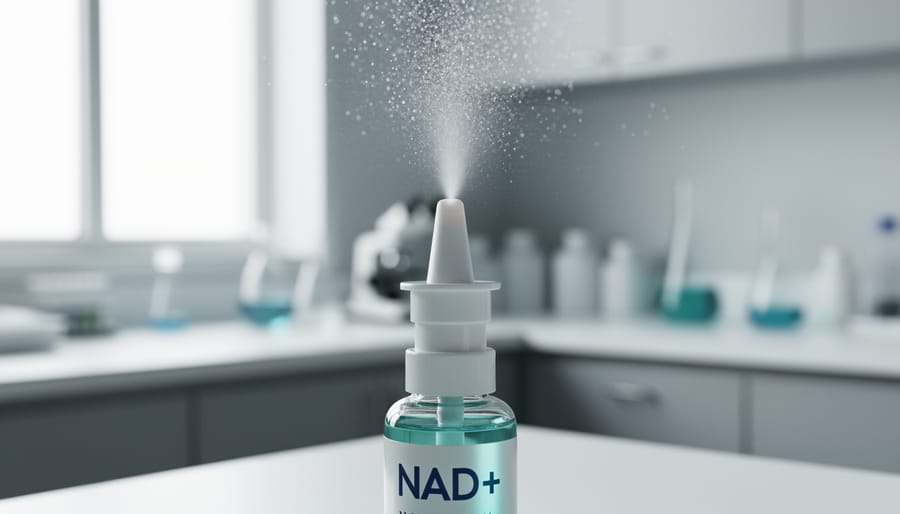
NAD+ nasal spray is a liquid formulation of nicotinamide adenine dinucleotide (NAD+), a molecule your cells use for energy metabolism, delivered through the nasal option instead of by injection, infusion, or capsule. Researchers are interested in the nasal route because the lining of the nose offers a short path into the bloodstream and, in theory, toward the brain. Whether that path works the way people hope is still an open question.
If you’ve spent time around medical marijuana research, the pattern will feel familiar: big interest, promising early signals, and a lot of claims running ahead of the evidence. This guide aims to keep you grounded. We’ll define the terms, explain how the spray is being studied, and answer the practical questions researchers hear most, including legality, dosing, safety, and how the nasal option compares with other NAD+ approaches.
Key Takeaway: The nasal route is an area of active investigation, and many proposed mechanisms remain theoretical. Early lab and animal-model findings don’t automatically carry over to people, so treat bold claims with caution and talk with a qualified professional before drawing conclusions.
Think of this as a community resource: clear answers, no hype, and a straight look at what is known and what isn’t.
What NAD+ Nasal Spray Means in Plain Language
NAD+ stands for nicotinamide adenine dinucleotide. That’s a mouthful, but the idea is simple: it’s a molecule your body makes and uses in nearly every cell, and it helps turn the food you eat into usable energy. Think of it as a tiny shuttle driver that carries energy-making ingredients from one chemical reaction to the next.
Here’s a quick glossary to keep the rest of this article easy to follow:
- NAD+
- A coenzyme found in every living cell that helps power energy production and supports cellular repair.
- Intranasal delivery
- Giving a substance through the nose, usually as a spray, rather than swallowing or injecting it.
- Bioavailability
- How much of a substance actually reaches your bloodstream or target tissue in a usable form.
- NAD+ precursors (NR and NMN)
- Building-block molecules, nicotinamide riboside and nicotinamide mononucleotide, that the body can convert into NAD+.
- Mucosa
- The moist lining inside your nose (and other body cavities) that absorbs and filters what passes over it.
So why do researchers care? NAD+ is tied to cellular energy, metabolism, and how cells respond to stress. Reported NAD+ levels tend to drop as people age, which has made it a popular subject in aging research. Scientists also study proteins called sirtuins, which rely on NAD+ to do their work, and they’re curious whether supporting NAD+ could matter for healthy aging.
The nasal route enters the picture because the lining of the nose is thin and rich in blood vessels. Researchers wonder whether a spray could offer a more convenient path than pills or injections, and whether it might sidestep some of the limits of digestion. That’s a question, not an answer.
It’s worth being clear about where things stand. NAD+ nasal spray is a topic of ongoing research interest, not an established treatment. A research compound is something scientists are still investigating, while an approved therapy has gone through rigorous testing and regulatory review for specific uses. Right now, NAD+ nasal spray sits firmly in the first category.
How Researchers Think NAD+ Nasal Spray Works
NAD+ Basics: Why Cells Need It
Think of NAD+ (nicotinamide adenine dinucleotide) as a tiny shuttle that moves energy around inside your cells. It carries electrons during the chemical reactions that turn food into usable fuel, which is why researchers often call it a coenzyme. Without it, the machinery that powers your cells simply stalls.
NAD+ also does a second job. Enzymes known as sirtuins and PARPs use it while helping repair damaged DNA and manage stress responses. So the molecule gets consumed as cells maintain themselves, and the body has to keep rebuilding it.
Several studies report that NAD+ levels tend to fall as people get older, though the size of that drop and what causes it are still debated. Some researchers point to increased consumption by repair enzymes, others to slower production. That open question is a big reason NAD+ and its delivery methods draw so much scientific curiosity.
The Nasal Route Versus Other Delivery Methods
Convenience and invasiveness vary a lot across the ways people try to raise NAD+. Oral supplements and precursors such as NR or NMN are the easiest: no needles, no clinic visit. The catch is digestion. Anything swallowed has to survive the gut and liver before it reaches circulation, much like the first-pass effect you see with cannabis edibles where only part of the dose arrives intact. Precursors also have to be converted into NAD+ inside cells, which adds another unknown.
IV infusions and injections sit at the opposite end. They deliver NAD+ straight into the bloodstream or tissue, so absorption is predictable, but they are invasive, need trained staff, and can be uncomfortable. Infusions in particular can take hours.
Intranasal delivery lands in the middle. It’s needle-free and quick, and the nasal lining is thin and richly supplied with blood vessels. Some researchers also point to the possibility of bypassing via nerve pathways that lead toward the brain. Still, this is where honesty matters: how much NAD+ actually crosses the nasal lining, and whether it stays intact, hasn’t been well established in humans. Convenience is clear. Absorption is the open question.
Where Researchers Are Looking: Potential Uses and Applications
Scientists are interested in NAD+ nasal spray for a handful of reasons, but every one of them is still a question being studied, not a promise. Here’s where the curiosity is focused and how much evidence exists today:
- Healthy aging: researchers ask whether restoring NAD+ levels affects age-related cellular decline, but the evidence is early and mostly preclinical.
- Cognitive function: the nose’s proximity to nerve pathways raises questions about brain effects, though human data specific to nasal delivery is very limited.
- Energy metabolism: because NAD+ is central to how cells produce energy, studies explore metabolic links, mostly in lab and animal models.
- Delivery and absorption: scientists are still working out whether intranasal NAD+ reaches tissues in meaningful amounts, and published human data remains sparse.
Notice the pattern. Each area sits at the “interesting hypothesis” stage rather than the “proven result” stage. A promising lab finding often doesn’t carry over to people, and plenty of compounds that looked exciting in cells never delivered in clinical trials. So no health outcome should be assumed, no matter how compelling the early science sounds.
If you’re coming from the cannabis world, you may recognize this cycle. Our community is used to separating anecdote from evidence, whether we’re comparing cannabis strains or reading up on medical marijuana benefits and asking what the research really supports. The same healthy skepticism applies here. Enthusiasm for a new compound is fine, but let the peer-reviewed studies, not marketing, tell you what’s actually known.
NAD+ Nasal Spray Frequently Asked Questions From Researchers
Researchers ask a lot of the same questions about intranasal NAD+, and honest answers often start with “it depends” or “we don’t know yet.” Here are the most common ones, answered as plainly as the current evidence allows.
Is NAD+ nasal spray legal and regulated?
NAD+ nasal sprays are generally sold as research or wellness products, not as approved drugs, and regulatory status varies by country and even by how a product is labeled. Check your local regulations and be cautious with any seller making treatment claims, since that can put a product into drug territory.
How is it different from NR or NMN supplements?
NR and NMN are precursors, meaning the body is thought to convert them into NAD+ after you take them, usually by mouth. A nasal spray delivers NAD+ itself through the nasal lining, though how much actually reaches tissues is still an open research question.
What dose or concentration is used in research, and why isn’t there a standard?
Concentrations and spray volumes differ from one product and study to the next, and there is no agreed-upon dose for this delivery route. Without large, well-controlled human trials, any specific number you see online should be treated as a starting point for discussion, not a recommendation.
How should it be stored, and does it stay stable?
NAD+ can degrade with heat, light, and time, so storage instructions matter. Follow the manufacturer’s guidance, which often includes refrigeration and protection from light, and be skeptical of products that make no mention of stability at all.
A few more questions come up just as often, so let’s take them one at a time.
Are there side effects or safety concerns? Since human data on intranasal NAD+ is limited, the full safety picture isn’t known. Nasal products in general can cause local irritation, such as stinging, dryness, or congestion, and people taking medications or managing health conditions should talk with a qualified healthcare professional first. If you also use cannabis products, mention that too, because a clinician can only weigh interactions they know about.
What should researchers look for in study design? Start with the basics: Is there a control group? Was the study blinded? How many participants were involved, and for how long? Be wary of small, short, or uncontrolled studies, and note whether the results were measured in humans, animals, or cells in a dish. Findings from one of those settings don’t automatically carry over to the others.
How can you judge product quality and purity claims? Look for independent third-party lab testing that you can actually verify, such as a certificate of analysis tied to a specific batch, rather than a generic badge on a website. Clear ingredient lists, stated concentrations, and transparent manufacturing details are good signs. Vague language, dramatic promises, and pressure to buy quickly are red flags.
If you’ve come across a study, a source, or a product claim you’re unsure about, the Marijuana Mastery community forum is a great place to compare notes with others who are asking the same careful questions.
Safety, Quality, and Smart Questions to Ask Before You Go Further
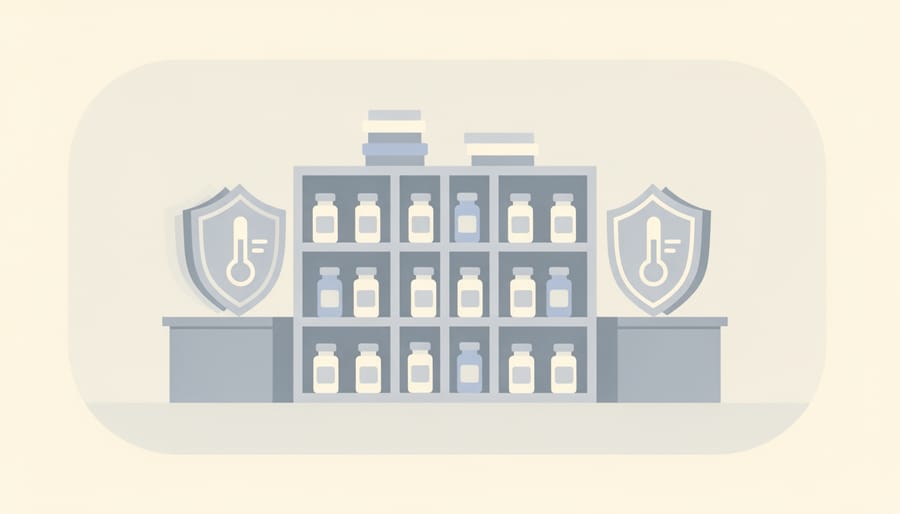
Before you go further down the NAD+ nasal spray path, a few smart questions can keep you safe and grounded. Think of this as your quick checklist.
Talk to a qualified healthcare professional. Start here. A doctor or pharmacist can look at your health history, your current medications, and whether this even makes sense for you. Bring the product details and any studies you’ve found.
Understand the regulatory status. Ask whether the product is approved for any use, or sold strictly for research. Those are very different things. If a seller can’t explain where the product stands legally, treat that as a red flag.
Look for third-party testing. Reputable sources share certificates of analysis from independent labs that confirm identity, concentration, and purity. No lab report, no trust. This is the same standard you’d apply to any cannabis product, and it’s a habit worth keeping everywhere.
Be wary of dramatic claims. Promises of reversing aging, curing conditions, or guaranteed results aren’t backed by solid human evidence. Real research uses cautious language. If the marketing sounds like a miracle, step back.
Consider interactions. Combining compounds can change how you feel in ways nobody has studied. If you also use cannabis, tell your healthcare provider, since cannabinoids can interact with certain medications. The same careful mindset applies to any inhaled or sprayed product, which is why guides on vaping device safety are worth reading for the bigger picture on quality and sourcing.
Check storage and handling. Ask how the product should be stored, how long it stays stable, and what the label says about ingredients. Vague answers aren’t good enough.
Verify your sources. Prefer peer-reviewed research over testimonials, forum hype, or influencer posts.
Staying curious is great. Staying cautious is smarter. Share what you’ve learned and ask questions in the Marijuana Mastery community, where we help each other sort fact from noise.
NAD+ nasal spray is simply a way of delivering a molecule your cells already use, sprayed into the nose instead of swallowed or injected. The idea is interesting, and researchers have good reasons to ask whether this route could work. But the honest answer today is that many questions remain open, from absorption and dosing to long-term safety and real-world quality.
The best approach is to stay curious without getting carried away. Ask where a claim comes from, look for peer-reviewed evidence, and be skeptical of anything that sounds too good to be true. Talk with a qualified healthcare professional before trying something new, especially if you already use cannabis products or medications.
Our community thrives on shared knowledge, so bring your questions, sources, and experiences to the Marijuana Mastery community forum. And keep checking back, because this research is moving, and what we know next year may look quite different from what we know now.